


Pokémon TCG Pocket - Card Game
The Pokémon Company
I enjoy card games that let me make meaningful decisions without demanding an entire evening, and Pokémon TCG Pocket fits that mood unusually well. It is a mobile card game from The Pokémon Company built around collecting, opening packs, and playing with Pokémon cards in a format designed for short sessions. The free entry point is attractive, especially because the game lets players open two booster packs at no cost each day. That routine gives the app a clear reason to revisit, even when I only have a few minutes.
What makes the experience interesting is the balance between collecting and actually playing. Some people will treat it as a digital album, enjoying the reveal of each card and the visual presentation. Others will focus on building a practical deck and testing decisions in matches. I think it works best when you appreciate both sides, because the collecting loop alone can feel dependent on luck, while the matches give those cards a purpose.
How the daily rhythm feels in real use
The first thing I noticed is how quickly the game establishes a routine. Opening a pack is a small event rather than a long ceremony, so it suits a commute, a waiting room, or a short break between tasks. The free daily openings create a natural stopping point, which is helpful for anyone who wants a game that does not constantly demand attention.
That speed also changes how I judge progress. In a traditional physical Pokémon card collection, finding a particular card can involve visiting shops, comparing prices, or trading with other players. Here, the digital format removes that practical effort and makes the reveal itself the main moment. The trade-off is that collecting can feel less tangible. I get convenience and immediate access, but I lose the physical cards, the table space, and the social ritual of handling a real deck.
The game is categorized as a card title, but it is not simply a digital replacement for every part of the tabletop Pokémon TCG. I would approach it as a more accessible companion-style experience: easier to start, easier to fit into a day, and more focused on quick engagement. If your priority is a full-length tabletop simulation with the same depth and pacing as a local tournament, this may not be the right substitute.
Related News

Why WhatsApp Messenger Still Makes Everyday Communication Feel Easy

Jurassic World: The Game Is the Better Dino Tycoon for Strategic Players

Threads in Real Life: Who Should Join, Lurk, or Leave

How SHEIN Turned Shopping Into an Endless Content Feed

How to Make Fortnite Feel Smarter on Mobile

Should You Switch to Microsoft Outlook on Mobile?
For a casual player, the low time commitment is a real strength. I can check the daily packs, look through new additions, and decide whether I want to play without planning around a long session. That makes it especially suitable for someone returning to Pokémon cards after years away. The familiar creatures provide an immediate connection, while the digital format avoids the intimidation of walking into a physical card shop and trying to understand every product at once.
What happens when the collection starts growing
As the card pool becomes more personal, the experience shifts. At first, almost every new card feels useful because it expands what I can recognize and experiment with. Later, duplicates and less relevant pulls become more noticeable. This is where expectations matter: the game is more satisfying when I enjoy the process of building a collection, not when I expect every opening to deliver a specific result.
My practical advice is to avoid treating every pack as a test of whether the game is “working” for you. Use the early collection period to learn which Pokémon and strategies you actually enjoy. That makes later choices more informed and reduces the temptation to chase one particular card simply because it looks appealing. The smartest early habit is to build around the cards you understand, rather than forcing a deck around a rare pull.
Gallery
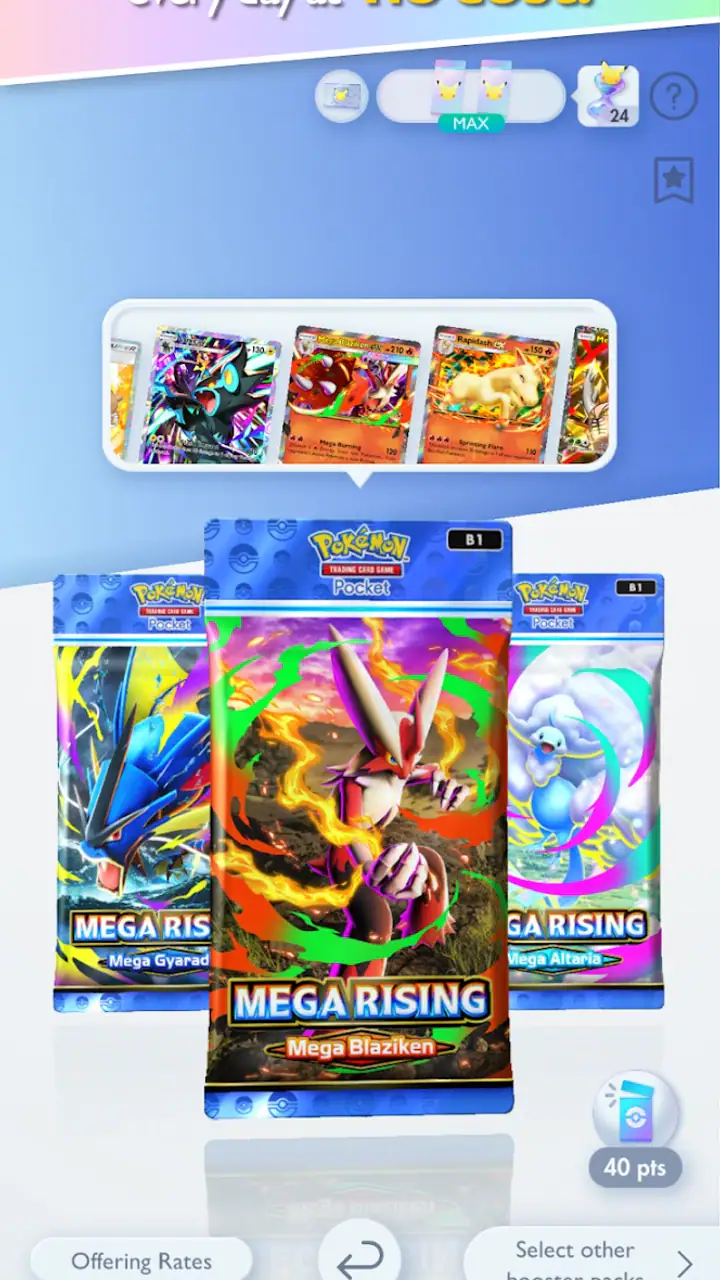
The free daily allowance also rewards patience. Someone willing to return regularly can experience the collecting loop without immediately spending money. That does not guarantee a particular collection or remove the influence of chance, but it gives cautious players room to decide whether the game deserves a place in their routine. I would recommend using that period as a trial rather than assuming purchases are necessary from the beginning.
Optional purchases range from $0.99 to $99.99 per item. That is a broad range, so I would be careful with the way I approach the shop. A small purchase may feel harmless in isolation, yet repeated spending can change the character of a supposedly free game. I prefer setting a personal limit before buying anything and treating the free daily openings as the normal pace, not as an obstacle to bypass.
Speed during matches and busy moments
The game feels most convenient when I use it in short bursts, but heavy use changes the questions I ask. During a longer session, I care less about whether a single screen opens quickly and more about whether the experience remains comfortable while I move between collecting, deck decisions, and matches. Card games can become tiring when menus, reveals, and repeated actions feel like separate chores, so a smooth rhythm matters more than a flashy opening animation.
I also find that the collecting side can encourage longer sessions than intended. A player may begin with the simple plan of opening the daily packs, then continue browsing cards, comparing possibilities, and testing a deck. That is not necessarily a problem, but it means the app can occupy more time than its short-session design initially suggests. If I am trying to protect a lunch break or avoid distractions before bed, I decide in advance whether I am only collecting or also playing.
One useful workflow is to separate “collection time” from “match time.” I first review new cards and make notes mentally about possible combinations, then return later when I have enough time to concentrate. This prevents rushed deck changes based on a single exciting pull. It also makes the game feel less random because I am evaluating the collection as a whole instead of reacting to each reveal.
Heavy use can also expose the limits of a mobile card game compared with physical play. A tabletop match naturally creates conversation, gestures, and a shared social setting. On a phone, the experience is more private and self-contained. I can play almost anywhere, but I do not get the same sense of occasion. Players who mainly want face-to-face interaction should look toward local physical play or a more explicitly social alternative.
Another trade-off is attention. The compact format is ideal when I have limited time, but quick access can make it easy to check the game repeatedly. I would not recommend it to someone who dislikes collection loops or who tends to feel pressured by daily routines. The same feature that makes the app easy to revisit may feel like an obligation if you want a completely open-ended game with no recurring habit.
Reliability, recovery, and keeping expectations realistic
From a user’s point of view, reliability is not only about avoiding crashes. It also means understanding what progress depends on, knowing how to return after an interrupted session, and feeling that the game remains manageable when I do not play every day. The daily pack structure makes regular visits valuable, but it should not make occasional players feel permanently behind.
I would approach the app with a simple recovery plan. If I have been away for a while, I would start by checking the current collection, identifying the decks I already understand, and playing a few low-pressure sessions before spending resources or making major changes. That is better than trying to rebuild everything at once. It also helps reveal whether I still enjoy the game’s central loop or merely feel compelled to catch up.
Short interruptions are another reason I prefer the mobile format here. A card game that can be approached in small pieces is easier to fit around real life than one that expects uninterrupted attention. Still, I would avoid starting a match when I know I may need to leave immediately. Even a compact game can become frustrating if I am distracted, travelling through an unreliable connection, or trying to multitask.
The app’s popularity suggests that it has reached a broad audience: it carries a 4.4 average from around 1.6 million ratings and has passed 50 million installs. Those figures do not tell me whether every player will enjoy it, but they do show that the concept has strong reach. The developer is The Pokémon Company, which gives the game a clear identity rather than making it feel like an unrelated card title using familiar characters.
Its content rating is Everyone, which makes the presentation approachable for a wide range of players. Even so, I would still explain the purchase system to younger users and decide in advance whether spending is allowed. An age rating describes the intended audience, not a personal budget policy. That distinction is important in any collectible game where optional purchases are visible during normal use.
Device limits and practical expectations
The minimum operating-system requirement is Android 7.0, so the game is available to a broad range of Android devices. That does not mean every compatible phone will feel identical. Older hardware may handle a card game adequately while taking longer to move through animations or menus, especially during extended sessions. I would judge the experience on the specific phone rather than assuming that compatibility guarantees the same comfort everywhere.
Storage and battery are practical concerns for any game that combines artwork, card collections, and repeated visual transitions. I would install it with enough free space for updates and avoid judging battery behavior from a single short visit. A quick pack opening tells me very little about how the device feels after browsing a collection and playing repeatedly. If the phone already struggles with other visually rich apps, I would keep expectations conservative.
There is also a difference between a phone that can run the game and one that makes it pleasant. A larger, responsive display can make card details easier to inspect, while a smaller or older screen may make collection browsing less comfortable. That matters more here than it would in a purely text-based game because the cards themselves are the main attraction.
I would also recommend keeping the app updated when possible. The current version is 1.4.1, and staying current is generally the sensible way to receive the intended experience. Updating can require time and storage, so players on older devices or limited connections may want to do it over a stable connection rather than at the worst possible moment. I would not install it on a device that is already close to its storage limit without first making room.
For someone choosing between this and a physical card collection, the device requirement is both an advantage and a limitation. The phone gives instant portability and removes the need to carry cards, sleeves, and a play surface. On the other hand, the experience depends on the phone remaining available and comfortable. A physical deck does not compete with notifications, battery level, or screen size.
Who gets the most from this card game
I think the best audience is a Pokémon fan who enjoys collecting but wants a lighter, more convenient way to interact with cards. It also suits players who like daily goals in moderation, enjoy opening packs, and are happy to experiment with a growing digital collection. The free starting point makes it easy to test those preferences before committing money.
It is especially useful in ordinary situations where a full game is impractical. I can imagine using it while waiting for an appointment: open the available packs, inspect the new cards, and stop without needing to unpack anything or coordinate with another person. On a train ride, I might use the same time to refine a deck and play a short session. The value comes from turning small gaps in the day into a focused activity rather than requiring a dedicated gaming setup.
I would be more cautious recommending it to someone who wants guaranteed collection progress, deep competitive structure, or a completely purchase-free experience. The random nature of pack openings may be exciting for one player and irritating for another. Someone who dislikes duplicate cards or feels uncomfortable around in-app purchases may enjoy a traditional standalone card game more.
It is also not my first choice for a group that wants to sit together and talk while playing. The app is convenient for solo access, but physical Pokémon cards offer a stronger shared ritual. Likewise, a player who wants a complex strategy game with long matches and extensive deck tuning may prefer a more demanding digital card game. This title’s appeal is its accessibility and Pokémon presentation, not the promise of unlimited competitive depth.
How it compares with the usual alternatives
Compared with physical Pokémon cards, the digital version wins on portability, immediate setup, and the ability to open packs without visiting a shop. It is easier to try and less intimidating for a newcomer. Physical cards win on ownership, trading, collecting something tangible, and creating a social experience around the table. I would choose the app for convenience and the physical game for community and permanence.
Compared with general mobile card games, the Pokémon identity is the decisive difference. Familiar creatures and card artwork can make learning feel more inviting than starting with an entirely new world. However, that appeal may not be enough for players who care only about mechanics. If the Pokémon theme does not interest you, another card game with a stronger competitive focus may offer more satisfying long-term decisions.
Compared with simply collecting cards through a digital album or viewing them elsewhere, this game adds the possibility of using the collection in play. That gives new cards a practical reason to matter. The downside is that the game asks me to engage with its own pace and systems rather than letting me browse freely with no progression loop. It is best understood as a collection-and-play experience, not merely a card gallery.
One subtle advantage over physical collecting is experimentation. I can try a deck idea without worrying about damaging sleeves, losing a card, or carrying several boxes. That lowers the cost of curiosity. The important limitation is that digital experimentation does not replace the satisfaction of physically arranging a deck or handing it to another person. The two formats complement each other better than they compete directly.
My verdict after weighing the complete experience
Pokémon TCG Pocket succeeds because it gives Pokémon card collecting a compact mobile shape. The free daily pack routine is easy to understand, the card theme is immediately recognizable, and the game can fit into moments when a physical deck would be inconvenient. I like that a player can begin without paying, learn the rhythm, and decide gradually whether collecting and matches are genuinely enjoyable.
Its weaknesses are tied to the same design. Pack luck can make progress feel uneven, optional purchases require self-control, and the digital format cannot reproduce the social or tactile qualities of physical cards. Players with older phones should also keep their expectations practical: meeting the Android requirement is only the starting point, while screen comfort, free storage, and sustained-session behavior depend on the device.
With a price of free, an Everyone rating, and optional purchases from $0.99 to $99.99 per item, I would recommend trying it cautiously rather than rushing into the shop. Use the daily openings, build around cards you actually enjoy, and separate casual collecting from focused matches. That approach gives the game room to show its strengths without letting its reward loop dictate your spending or schedule.
My final recommendation is positive for Pokémon fans who want a quick, approachable card experience on Android. I would skip it if your main goal is a full tabletop replacement, a highly demanding competitive card game, or a collection with predictable progress. For everyone in between, it is a polished way to make small pockets of time feel like a personal Pokémon card session, provided you treat the free rhythm as the feature rather than seeing purchases as the destination.
FAQs for Pokémon TCG Pocket - Card Game
What is Pokémon TCG Pocket - Card Game?
Pokémon TCG Pocket - Card Game is a mobile adaptation of the popular Pokémon Trading Card Game, allowing players to collect, trade, and battle with virtual Pokémon cards. It provides an immersive experience with digital decks and offers both single-player and multiplayer modes, along with various events and challenges.
Is Pokémon TCG Pocket - Card Game free to play?
Yes, Pokémon TCG Pocket - Card Game is free to download and play. However, it offers in-app purchases for booster packs, special cards, and other premium features. While you can enjoy the game without spending money, purchasing items can enhance your experience and help you build stronger decks.
What are the system requirements for Pokémon TCG Pocket - Card Game?
Pokémon TCG Pocket - Card Game requires Android 6.0 or later and iOS 11.0 or later. It’s recommended to have a device with at least 2GB of RAM for smoother gameplay. Ensure your device has enough storage space for updates and additional content downloads.
Can I play Pokémon TCG Pocket - Card Game offline?
Pokémon TCG Pocket - Card Game requires an internet connection to access most of its features, including multiplayer battles, trading, and events. Some single-player modes may be accessible offline, but a connection is necessary for syncing progress and accessing the full range of features.
How do I collect cards in Pokémon TCG Pocket - Card Game?
Players can collect cards in Pokémon TCG Pocket - Card Game by opening booster packs, completing challenges, and participating in events. Cards can also be traded with other players. Managing your collection and building strategic decks are crucial for succeeding in battles and tournaments.
Pros
- Engaging gameplay with strategic depth.
- Wide variety of cards and decks available.
- Regular updates with new content.
- User-friendly interface and tutorials.
- Cross-platform play enhances community.
Cons
- Requires constant internet connection.
- In-app purchases can be expensive.
- Occasional server connectivity issues.
- Limited offline features and modes.
- Can be complex for new players.


